Health and Safety Policy — Waterloo Skip Hire
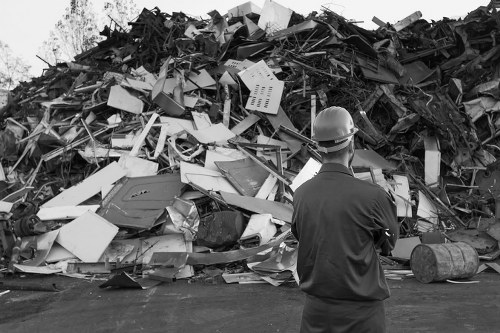 This Health and Safety Policy sets out the commitment of Waterloo Skip Hire to protect the health, safety and welfare of its employees, contractors and the public in the context of waste management and skip hire operations. The policy applies across the company's entire skip hire service area and waste collection activities, and is designed to ensure safe delivery of rubbish company services while meeting industry best practices. The purpose is to prevent work-related injury and ill health, and to promote a culture where safe working is integral to every rubbish removal and waste transfer task.
The policy covers: scope and responsibilities, risk assessment and control measures, vehicle and manual handling safety, personal protective equipment, hazardous materials handling, incident reporting, training and competency, monitoring and continual improvement. It is intended for all staff, subcontractors and anyone engaged in our skip hire and waste management operations. This document will be reviewed periodically and updated to reflect operational changes and evolving standards in the skip hire service area.
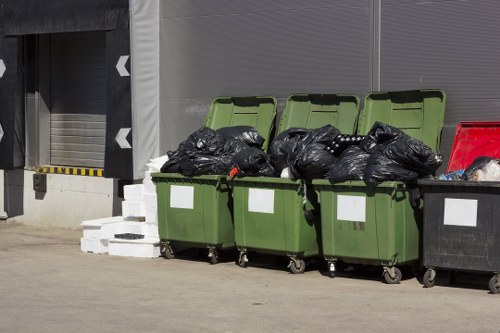 Managers and supervisors are responsible for implementing this policy within their areas of control. They will ensure that risk assessments for rubbish removal, skip loading, site access and vehicle operations are carried out and documented. Employees must follow safe systems of work, use provided PPE and report hazards or unsafe conditions immediately. Everyone has the right and responsibility to stop work if an activity poses an immediate threat to safety.
Risk Assessment, Controls and Safe Systems
Risk assessments form the foundation of hazard control across our waste collection service area. Identified hazards — including manual handling of bulky refuse, working near traffic, unstable loads, sharps in mixed waste and potential hazardous substances — will be evaluated and controlled using the hierarchy of controls: elimination, substitution, engineering controls, administrative controls and PPE. Controls are selected to be practicable and effective for each rubbish company operation.
 Safe systems of work will be developed for routine and non-routine tasks such as skip delivery, pick-up, loading assistance, container relocation and site clearing. These systems include traffic management plans for customer sites, exclusion zones during lifting, secure chaining of skips for transport, and lock-out procedures for equipment maintenance. Only competent and authorised personnel will carry out permit-required tasks.
Where chemical or hazardous wastes are encountered, the company will follow appropriate segregation, labeling and disposal procedures. Waste that poses an immediate risk (for example, corrosives, asbestos or unknown liquids) will be isolated and dealt with by trained staff or specialist contractors in accordance with regulatory guidance for hazardous waste handling within the rubbish removal sector.
Training, Competence and Equipment
All staff engaged in skip hire and waste removal activities will receive training that covers: vehicle and plant operation, manual handling techniques, site risk awareness, PPE use, spill response and incident reporting. Training will be refreshed at regular intervals and after significant changes to operations. Competence is assessed and documented to ensure safe performance in the service area.
Plant, vehicles and lifting equipment will be maintained to appropriate standards and inspected before use. Drivers and operatives are required to carry out pre-shift checks and to report defects. Where mechanical handling aids can reduce manual handling risks, they will be provided and used.
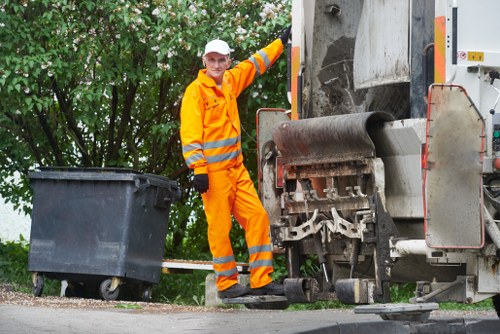
 The company maintains an inventory of PPE and safety equipment suitable for typical rubbish company tasks: high-visibility clothing, gloves resistant to puncture and cuts, safety boots, eye protection, and respiratory protection where dust or fumes are present. PPE use is mandatory where residual risks remain after other controls are applied.
Incident reporting and investigation procedures ensure that accidents, near-misses and dangerous occurrences are recorded promptly, investigated to determine root causes, and followed by corrective actions. Lessons learned feed into revised risk assessments and training. All staff are required to cooperate with investigations and to participate in remedial actions where appropriate.
A programme of regular audits and inspections will monitor compliance with this policy across the skip hire service area. Performance indicators include incident rates, completion of risk assessments, training records and the status of equipment maintenance. Management reviews will consider audit findings and set objectives for continual improvement.
 This policy is supported by operational procedures, a clear allocation of responsibilities and a commitment to resource the necessary measures to manage health and safety risks effectively. Non-compliance with safety requirements will be addressed through corrective actions and disciplinary measures where necessary to protect people and assets. Waterloo Skip Hire expects all personnel and contractors to make safety a priority and to contribute positively to a safe working environment in every part of the rubbish removal and skip hire service area.
- Policy review: This policy will be reviewed annually or following significant changes to operations.
- Commitment: Senior management commit to providing leadership, resources and oversight to implement this health and safety policy throughout the service area.
- Continuous improvement: Ongoing evaluation and feedback mechanisms drive safer practices and reduce workplace risks.